AurumPCB
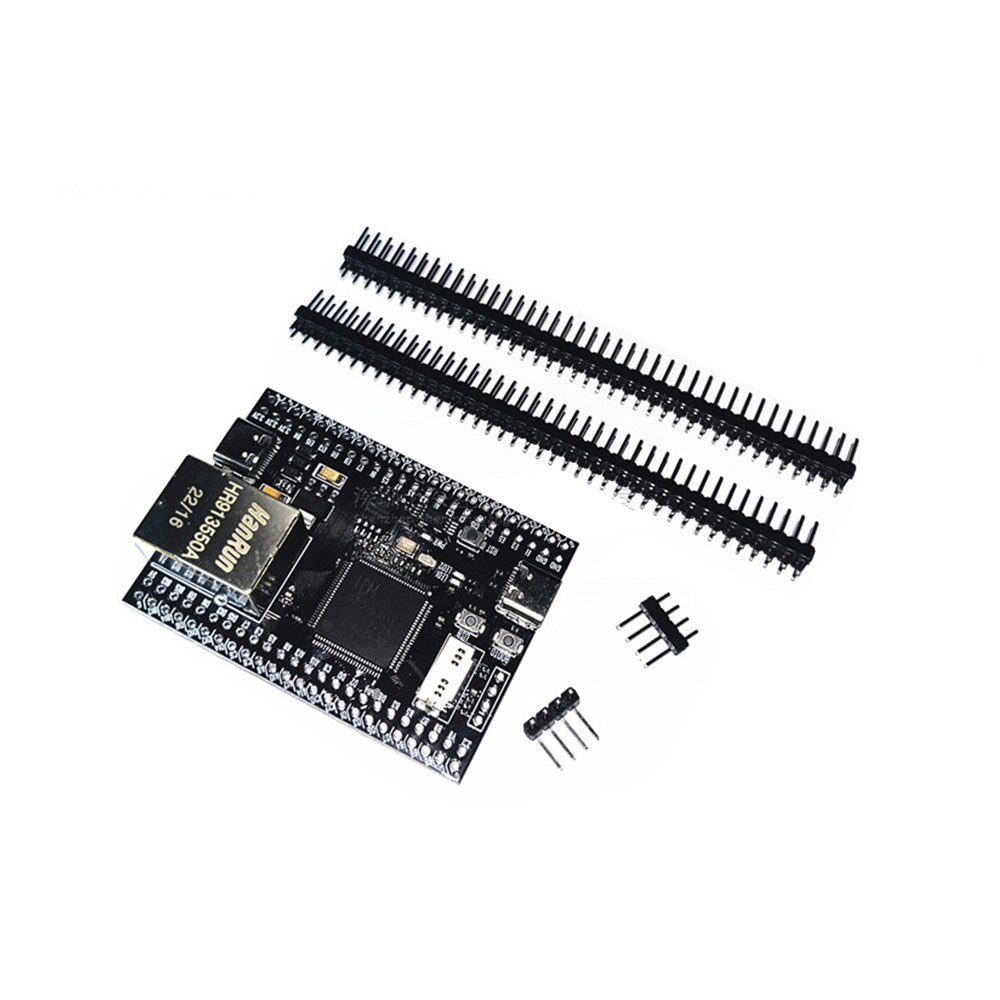
CH32V307VCT6Core board microcontroller development board 32Bit RISCV Controller Support RT-Thread
CH32V307VCT6Core board microcontroller development board 32Bit RISCV Controller Support RT-Thread
Couldn't load pickup availability
CH32V307VCT6 RISC-V Development Board with RT-Thread Support
Development board using the CH32V307VCT6 32-bit RISC-V microcontroller. Its listed features include a 144MHz Qingke V4F processor, 64KB SRAM, 256KB flash and hardware floating-point support, with RT-Thread support for development.
Product details
CH32V307VCT6 Product Features
Qingke V4F processor, up to 144 MHz system main frequency
Supports single-cycle multiplication and hardware division, supports hardware floating-point operations (FPU)
64KB SRAM,256KB Flash
Supply voltage: 2.5/3.3 V, GPIO unit independent power supply
Multiple low-power modes: sleep, stop, standby
Power-on/power-off reset, programmable voltage detector
2 groups of 18-channel general-purpose DMA
4 groups of operational amplifier comparators
1 True Random Number Generator TRNG
2 groups of 12-bit DAC conversion
2 units of 16-channel 12-bit ADC conversion, 16-channel touch key TouchKey
10 groups of timers
USB 2.0 full-speed OTG interface
USB 2.0 high-speed host/device interface (480 Mbps built-in PHY)
3 USART interfaces and 5 UART interfaces
2 CAN interfaces (2.0B active)
SDIO interface, FSMC interface, DVP digital image interface
2 groups of IIC interfaces, 3 groups of SPI interfaces, 2 groups of IIS interfaces
Gigabit Ethernet controller ETH (built-in 10 M PHY)
80 I/O ports, can be mapped to 16 external interrupts
CRC calculation unit, 96-bit chip unique ID
Serial 2-wire debug interface


About Crystal Oscillator, Clock
The onboard main crystal oscillator is 8M, and the MCU's maximum bus frequency is 144MHZ.
Onboard 32.768K low-speed crystal oscillator.
PWR
LED2
CH32V307
VCT6
31101FB47
About SPI and QSPI chips
Onboard EEPROM 24C32 (new version is 24C64) for small capacity data or parameter storage.
Onboard SPI Flash W25Q32 (new version is W25Q64) for large capacity data storage.

About the onboard network port
The onboard network port can directly conduct wired Ethernet communication. The PHY is integrated inside the chip, which has circuit integration advantages compared to external PHY hardware or external integrated network chips.

USB port download encryption program (file burning operation)
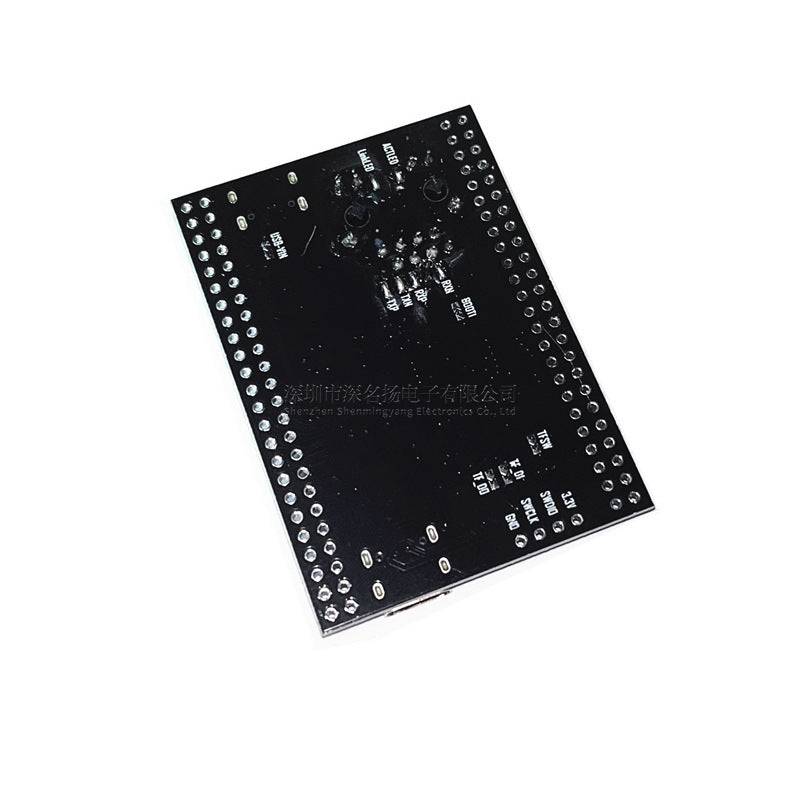
Both onboard Type-C USB interfaces can be connected to a USB cable for program download and encryption operations. The software used for downloading is named WCHISPTOol, which can be obtained from the official website or opened in the programming software MounRiver.
Download and encryption steps:
1. Connect the Type-C USB cable (to any USB port) to the computer.
2. Open the WCHISPTool software and configure the corresponding options (such as whether to encrypt the downloaded file).
3. Press and hold the boot0 button, press the RST button once while holding boot0, then release the boot0 button.
4. The software will automatically identify the device that needs to be downloaded.
5. Click download to complete the download and encryption.

Program writing and debugging
Because the MCU core is RISC-V, this situation determines that the ARM core ecosystem cannot be used. For example, an IDE such as keil-MDK cannot be used to develop programs. Fortunately, this chip can use a development IDE similar to KEIL-MDK: MounRiver, which also supports Chinese.
Debugger
Similarly, because the MCU core is RISC-V, the debugger for ARM microcontrollers can no longer be used. Fortunately, there are cheaper and more convenient dedicated debuggers YD-Link or WCH-Link. This debugger can switch modes to serve as a DAP-CMSIS debugger for ARM microcontrollers, and can also switch to another mode to debug CH32 V series microcontrollers. This debugger can perform single-step and breakpoint debugging in MounRiver.