AurumPCB
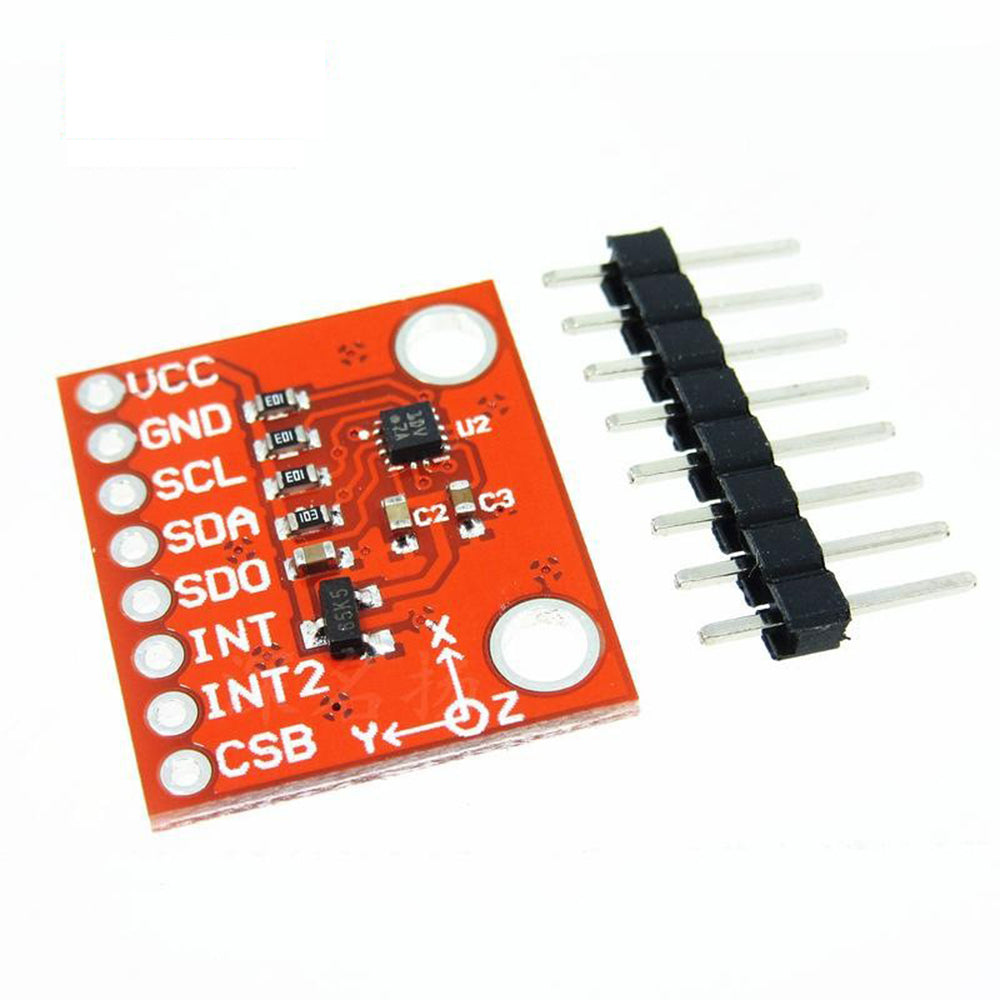
BMA-220 BMA220 Three-axis gravity sensor Three-axis acceleration Sensor Module
BMA-220 BMA220 Three-axis gravity sensor Three-axis acceleration Sensor Module
Couldn't load pickup availability
BMA220 Three-Axis Gravity Sensor Three-Axis Acceleration Sensor Module Development Board
Resolution: 6bit
Range: 2/4/8/16g
Communication method: IIC/SPI
Basic description:The BMA220 accelerometer has a package size of only 2mm × 2mm × 0.98mm. Compared to the 6×6 sensor first introduced by Bosch Sensortec in 2005, the new 2×2 LGA package reduces the circuit board footprint by 79%. Reducing the product size does not mean a reduction in its functionality or quality. The BMA220, a mature three-axis accelerometer, is widely used by numerous OEM customers. It features electronic data output, a programmable measurement range of four steps from ±2g to ±16g, and an integrated analysis unit capable of identifying specific types of movement. In the field of pedometer applications, Bosch Sensortec has developed a dedicated software program specifically for the BMA220, which significantly reduces the time required for developing end-user devices. The BMA220’s motion recognition algorithm is embedded in an ASIC, allowing the new sensor to actively and automatically detect random movements, changes in spatial position, single clicks, double clicks, and variations in movement speed, whether fast or slow. The parameters for identifying movement can be modified and programmed by the customer themselves. The BMA220 sensor indicates the presence of new data through an interrupt output and simultaneously converts the signal format, providing a digital signal interface output. This means that the end-product developers do not need to perform any further processing on the complex three-axis acceleration data initially recorded by the internal micro-mechanical readout device. The analysis electronics, integrated into the BMA220 sensor, perform intensive signal analysis, which is executed by the microcontroller of the host application system. This will significantly reduce the energy consumption of the device and extend the battery life considerably. This component can be used in applications such as 3D spatial orientation for mobile phones, PDAs, and game controllers, as well as for setting up reaction functions based on specific actions, such as screen flip detection or enabling silent mode with a double tap on the phone
Share