AurumPCB
6String integration22V24V12A Solar lighting 18650for Lithium battery protection board BMS
6String integration22V24V12A Solar lighting 18650for Lithium battery protection board BMS
Couldn't load pickup availability
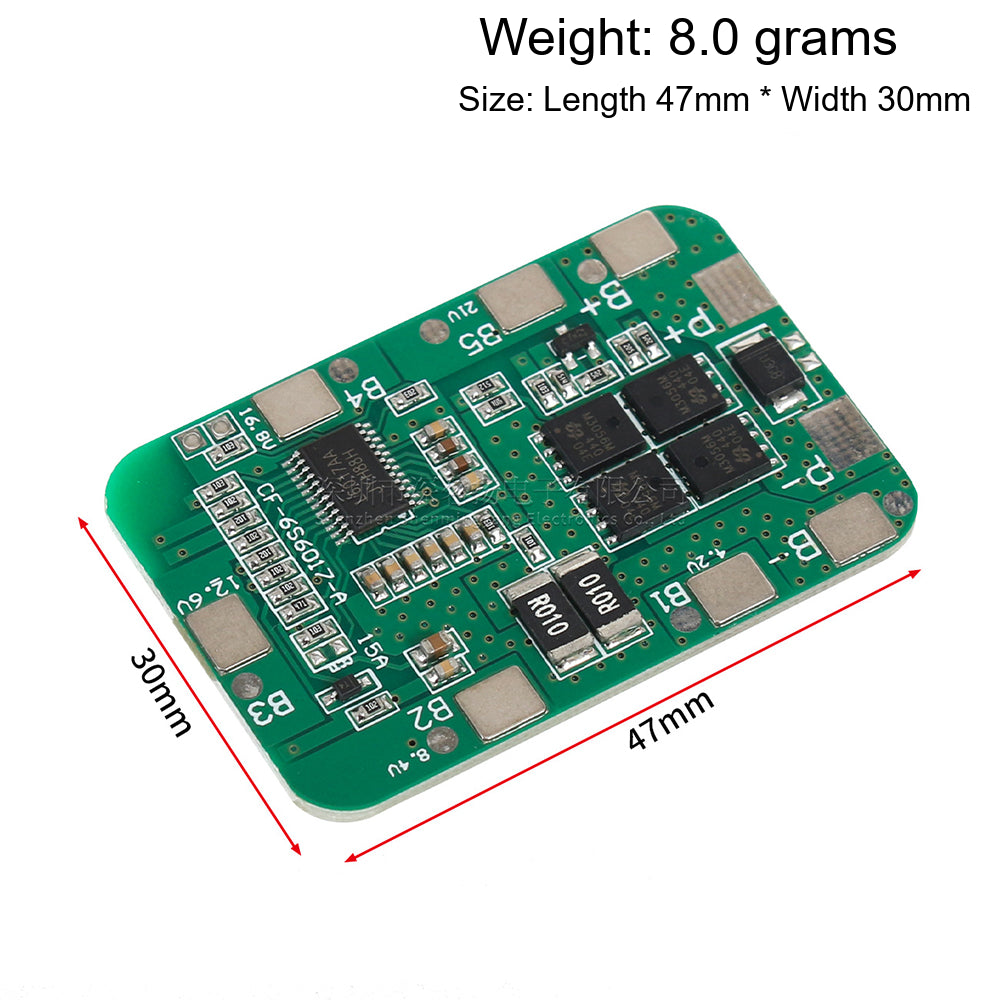
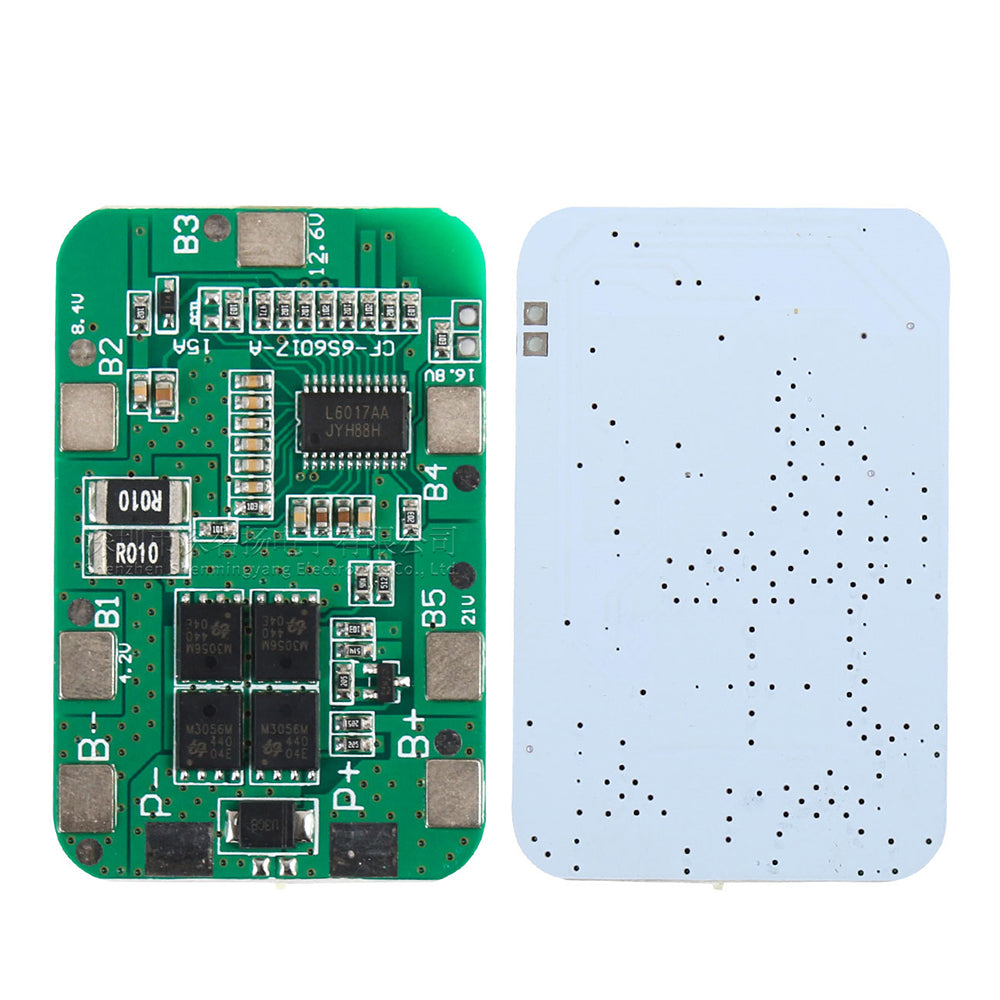
CF-6036-A 6S 22 V 12 A Lithium Battery BMS, No Balancing
The CF-6036-A protection board supports six-series ternary lithium packs and uses a common charge/discharge port. It lists 12 A discharge and 10 A charging, without a cell-balancing circuit.
Product details
| Discharge Current | 12 A | Product Model | ||
|---|---|---|---|---|
| CF-6036-A | ||||
| Main Circuit On-Resistance | ≤25mΩ | Size | ||
| Charging Current (Common Port) | 10 A | 52 × 32 × 3 mm | ||
| Charging Current (Separate Port) | / | Specification | ||
| Charging Voltage | Ternary: 25.2 V | 6-Series Ternary 22 V-12 A Without Balancing | ||
| Overcharge Protection | Balancing Voltage | |||
| Detection Voltage: | Ternary: 4.25±0.025 V | Detection Voltage: | / | |
| Detection Delay: | 0.1S | Detection Delay: | / | |
| Release Voltage: | Ternary: 4.10±0.05 V | Balancing Current: | / | |
| Overdischarge Voltage Protection | Discharge Current Protection | |||
| Detection Voltage: | Ternary: 2.7±0.08 V | Detection Voltage: | 100 mV | |
| Detection Delay: | 0.1S | Detection Delay: | 1000mS | |
| Release Voltage: | Ternary: 3.0±0.1 V | Current Protection: | 20±3 A | |
| Short Circuit Protection | Temperature Control Protection | ||
|---|---|---|---|
| Trigger Condition: | External load short circuit | Discharge over-temperature protection: | / |
| Detection Delay: | 250uS | Discharge high temperature release temperature: | / |
| Release Condition: | Disconnect load/Charge activation | ||
| Self-consumption Power | Operating Temperature | ||
| Working power consumption: | ≤50 uA | Temperature Range: | -30 °C/+80 °C |
| Product Application Scope | |||
| 18650 battery pack, power bank, electric fan, small desk lamp and other small lithium battery devices. | |||
6-cell ternary 22 V lithium battery protection board


6-series ternary 22 V common port 12 A integrated, without balancing
Application Range
Including all lithium battery fields such as electric vehicles and battery packs
Lithium battery protection board wiring diagrams, all can be viewed simply and easily understood
Wiring diagram for 6-series ternary 22 V-12 A

- What is the difference between integrated and single-cell cascade?
Single-cell cascade solution
Advantages: The number of series cells can be downward compatible, flexible in use; the charging current value and discharging current value of the same-port protection board are consistent. (Currently widely used in the market)
Disadvantages: No protection when voltage sampling wire falls off; no overcurrent protection during charging; only high-temperature protection, no low-temperature protection: performance is not as stable as integrated solutions.
Integrated solution
Advantages: Has high-temperature and low-temperature protection; compared to single-cell cascade, it has more stable performance and charging overcurrent protection.
Disadvantages: Limited to a single number of series cells, cannot be downward compatible with other numbers of series cells; the charging current of the same port is lower than the discharging current.
- What are same-port and separate-port, and what is the difference between them?
We use a 13-series 48 V 15 A protection board as an example. Same-port 15 A means that your charging negative terminal and discharging negative terminal are connected to the same point on the protection board (our C-), sharing one interface for both charging and discharging negatives, so its charging current and discharging current are both 15 A. Separate-port is just the opposite, where the charging negative terminal (C-) and discharging negative terminal (P-) are separated and connected to different points on the protection board.
- What is the balancing function?
The working principle and function are as follows: When one cell of your battery reaches a voltage of (polymer 4.18 V, LiFePO4 3.6 V), the balancing for that cell on the protection board will automatically activate. After activation, the balancing resistor on the protection board will begin to discharge at a current of 35 mA. (When discharging during balancing, slight heat may be generated on the back of the protection board; this is a normal reaction.)
- The relationship between battery capacity and protection board current?
There is actually no direct relationship between battery capacity and the current rating of this board. A large capacity does not mean a large battery; it mainly depends on the continuous current. In other words, the larger your motor, the higher the continuous current rating you need for the protection board. This has no direct relationship with your battery capacity.