AurumPCB
5-24V Multi-functional cabinet LED Light touch switch, dimming smart switch, capacitive sensor, stepless dimming module
5-24V Multi-functional cabinet LED Light touch switch, dimming smart switch, capacitive sensor, stepless dimming module
Couldn't load pickup availability
5–24 V Capacitive Touch LED Switch and Stepless Dimmer Module
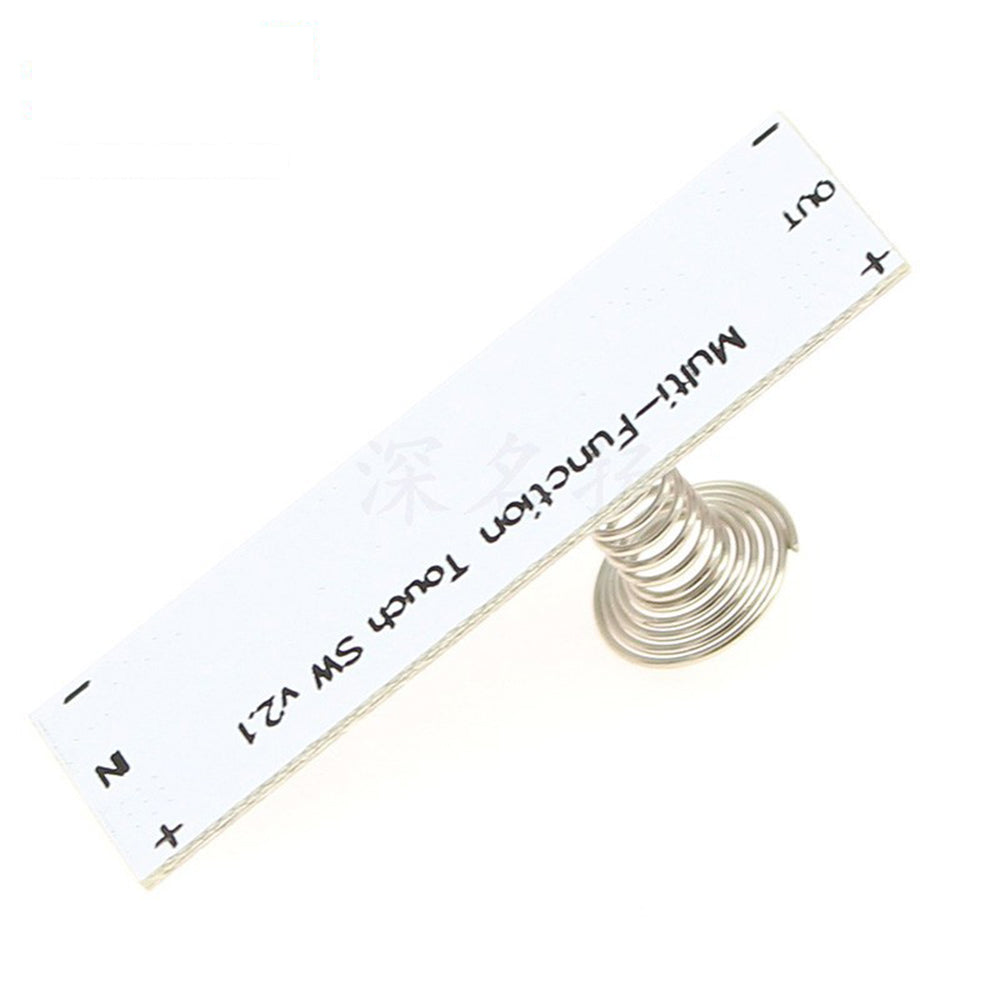
This touch control module combines LED switching with continuous brightness adjustment. It accepts a 5–24 V DC supply, with output voltage equal to the input, and lists a maximum resistive load current of 3 A.
Product details
Product overview
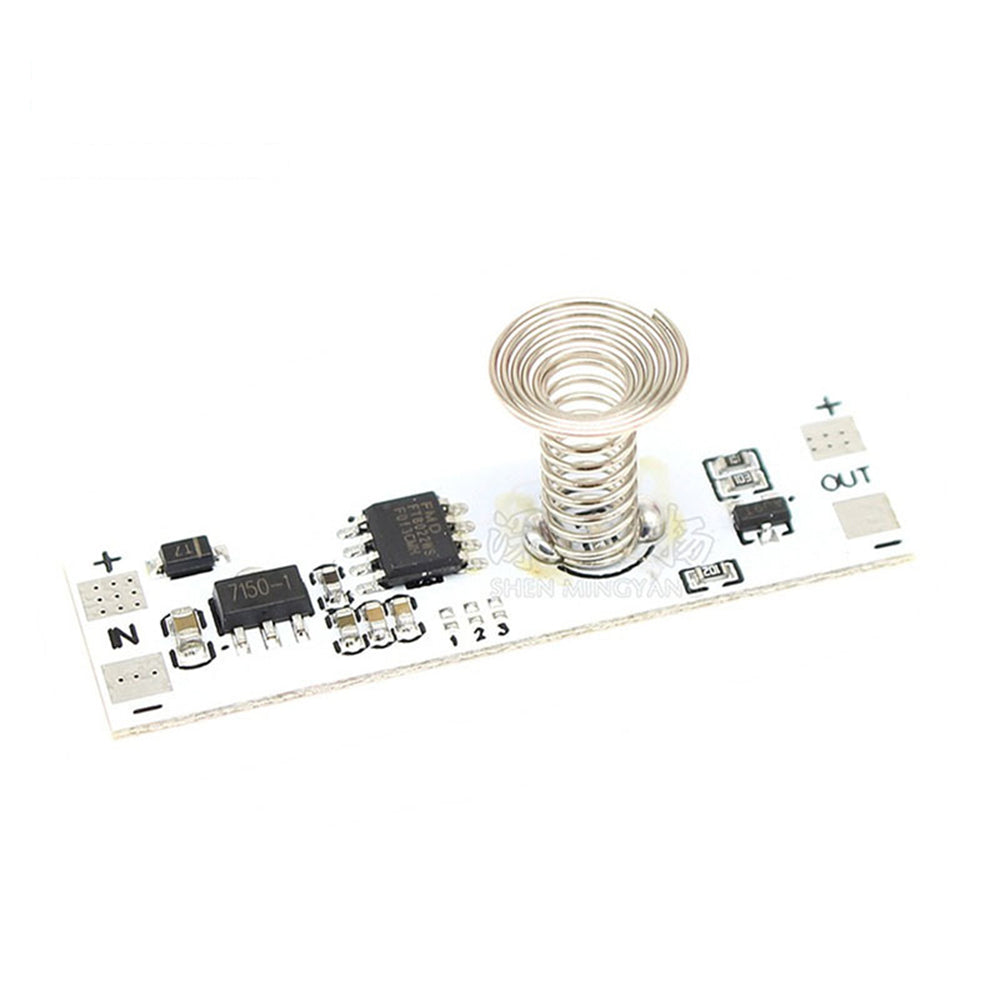
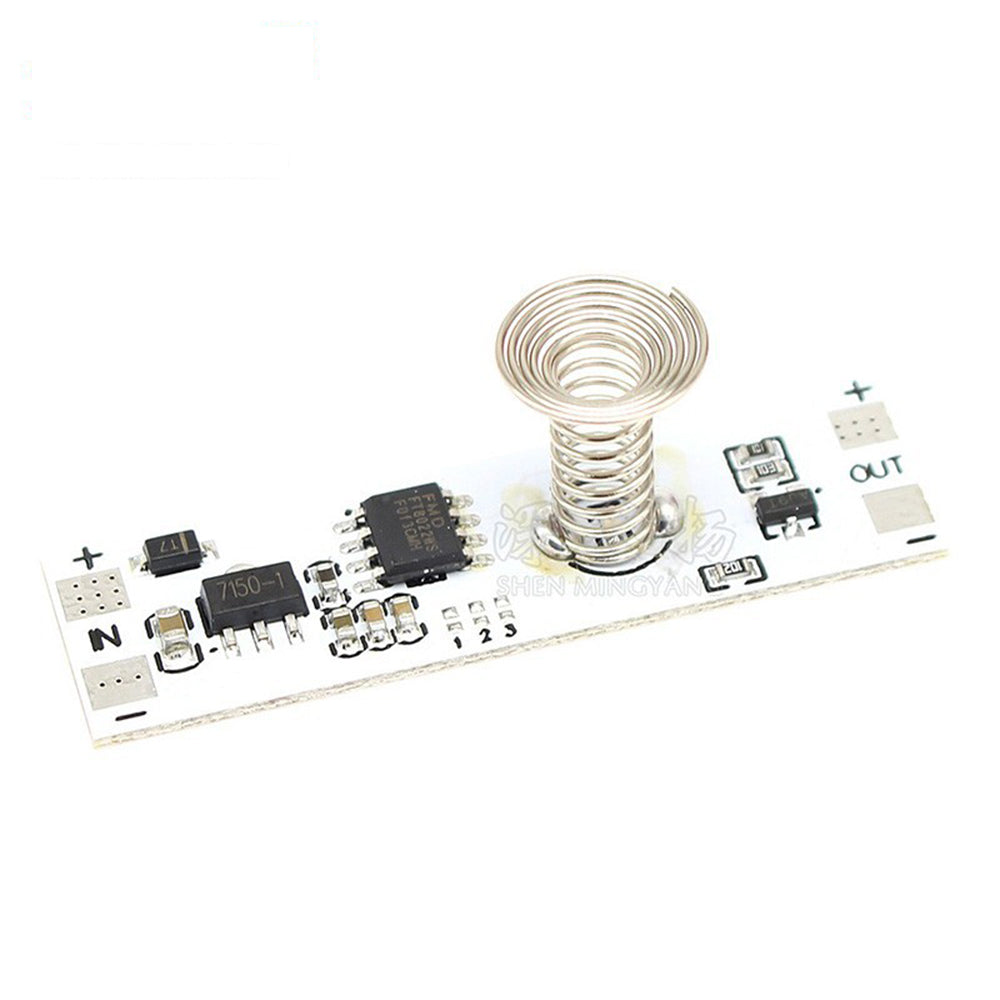
The multifunctional touch sensor module is an integrated circuit module designed to realize a human touch interface. It can replace mechanical tactile buttons; using this module enables touch switch control and brightness adjustment of LED lights. This module has a simple structure and is easy to operate.
The design circuit of this module can automatically overcome various interferences caused by ambient temperature, humidity, surface debris, etc., avoiding button differences caused by resistor and capacitor tolerances. It is the perfect choice for your product development and upgrades.
| Input voltage | DC5 V-24 V (Recommended 12 V) | Output voltage | Equal to input voltage |
|---|---|---|---|
| Load power | 72 W (MAX) | Load current | Resistive 3 A (MAX) |
| Standby current | 10-15 mA | Standby power consumption | ≈0.01 W |
| Operating temperature | -25 °C-85 °C | Output frequency | 32KHZ |
| Product weight | ≈15g | Product dimensions | Length 42 Width 12 Height 14 (MM) |
Warm reminder:
- The input voltage cannot be lower than 5 V or higher than 24 V, 12 V is the best.
- The load power cannot be higher than 72 W, otherwise there will be induction but no action on the load.
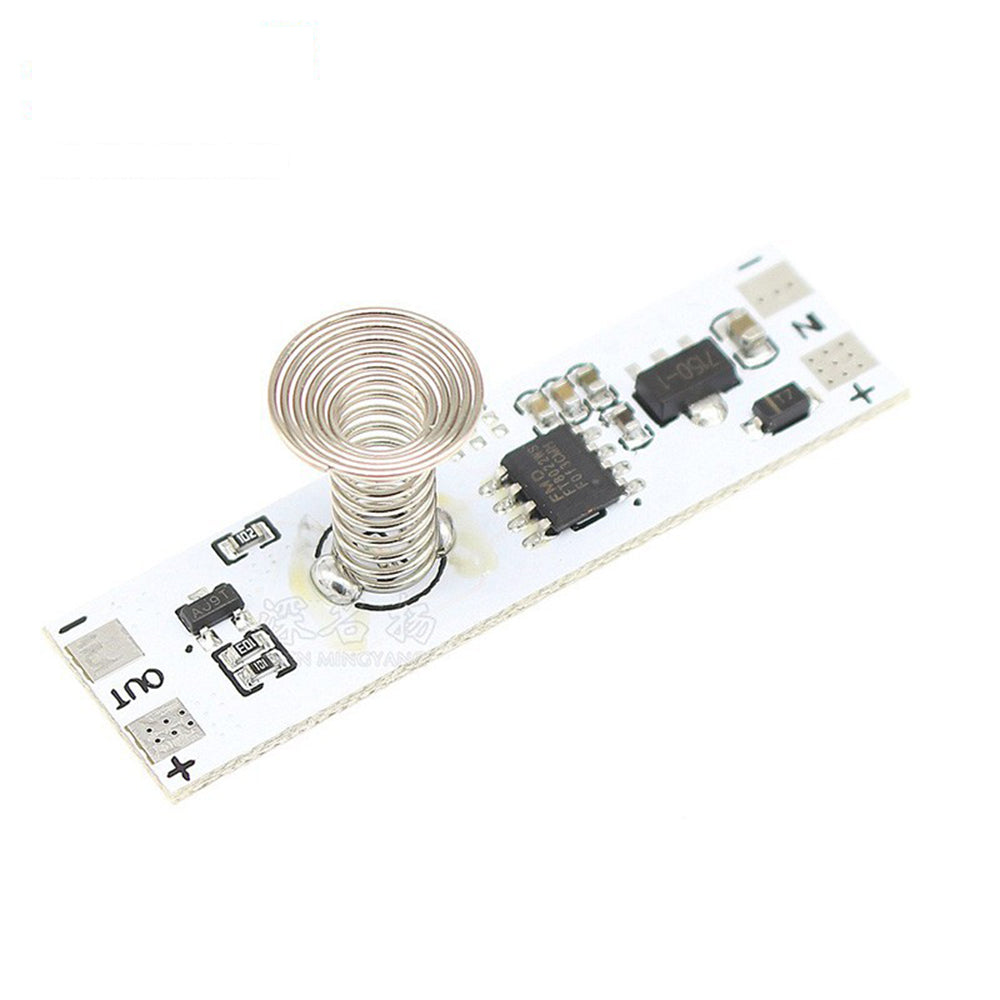
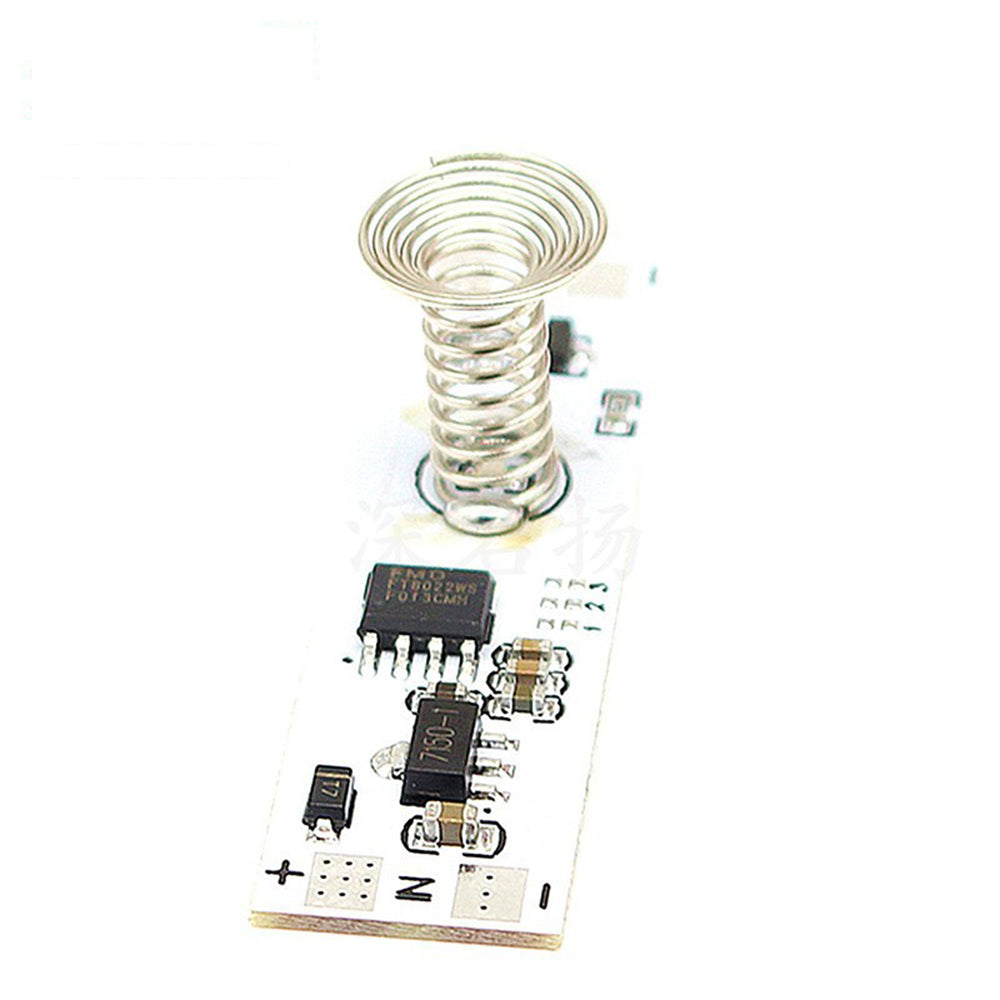
- Do not reverse the input and output connections; IN is for input and OUT is for output, otherwise it will burn out the circuit.
Touch switch size: 42 × 12 (MM) Sensing thickness: 1CM-1.5CM.

Function mode selection:
Default is Mode 1:
That is, disks 1, 2, and 3 are all not welded; OPT1, OPT2, and OPT3 are: 1 1 1
Other modes are as shown in the table below: Not welded is 1, Welded is 0
| Mode | OPT1 | OPT2 | OPT3 | Dimming Method | |
|---|---|---|---|---|---|
| 1 | 1 | 1 | 1 | No brightness memory, no brightness buffer | Stepless dimming |
| 2 | 1 | 1 | 0 | With brightness memory, no brightness buffer | Stepless dimming |
| 3 | 0 | 1 | 1 | Sequence High -> Medium -> Low -> Off cycle | Three-step dimming |
| 4 | 0 | 1 | 0 | Sequence Low -> Medium -> High -> Off cycle | Three-step dimming |
| 5 | 1 | 0 | 1 | Output low active, normally high level | Synchronous button |
| 6 | 0 | 0 | 1 | Output high active, normally low level | Synchronous button |
| 7 | 1 | 0 | 0 | Output low active, normally high level | Switch self-locking |
| 8 | 0 | 0 | 0 | Output high active, normally low level | Switch self-locking |
Notes
- The default state of a floating pad is high level 1; shorting the pads results in low level 0;
- Brightness memory does not refer to power-off memory, but rather brightness memory during the touch switch process after the module is powered on; once the module loses power, the brightness will return to its default state;
Application scenarios:
Wardrobe lights, display cabinet lights, LED rigid light bars, light strips, aluminum groove lights, touch eye-protection desk lamps, etc. (Applicable panel materials: Insulating materials, such as plexiglass, ordinary glass, tempered glass, plastic, wood, paper, ceramics, stone, etc.)